7 Oct 2026
Algorithmic Patterns Shaping Strategy Choices in Digital Card Rooms

Digital card rooms rely on complex algorithms that generate random outcomes while simultaneously tracking player actions across millions of hands each month, and these systems create identifiable patterns that influence how participants adjust their decisions during play. Observers note that platforms deploy random number generators certified under standards from bodies such as the Nevada Gaming Control Board, which ensures statistical fairness yet produces sequences that software tools can analyze for frequency deviations over large datasets.
Core Mechanisms Behind Pattern Formation
Random number generators operate within strict mathematical parameters that platforms publish in technical white papers, and players who employ tracking software collect hand histories to map bet sizing tendencies, fold frequencies, and positional adjustments across thousands of sessions. Researchers at institutions including the University of Alberta have documented how these aggregated datasets reveal clusters of behavior that repeat under specific stack depths and blind levels, allowing participants to refine preflop ranges and postflop lines accordingly. Data from industry reports shows that solvers such as PioSolver and GTO+ process billions of game-tree nodes to output equilibrium strategies, which in turn shape the reference points users compare against their own historical results.
Player Adaptation Through Data Analysis
Participants upload hand histories into analytical programs that output heat maps of opponent tendencies, and these visualizations highlight spots where continuation bet frequencies diverge from population averages or where river calling ranges tighten under certain board textures. One study released by the Poker Players Research Group examined over 50 million hands from major sites and found that players who reviewed solver outputs increased their expected value in heads-up pots by measurable margins compared with those relying solely on intuition. Software also flags timing tells and auto-adjusts for rake structures, while platforms in regions regulated by teh New Jersey Division of Gaming Enforcement require detailed logging that feeds into compliance audits yet supplies the same raw data players use for strategy refinement.
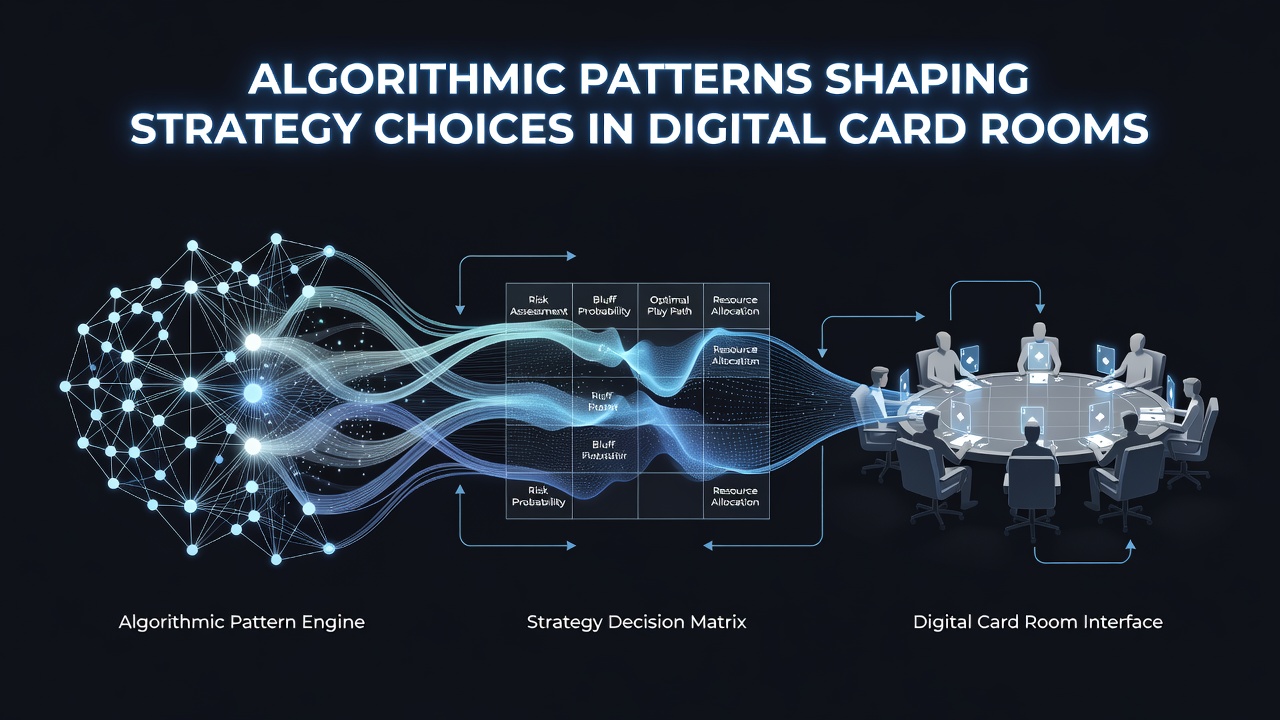
Multi-table players often set up custom filters that isolate river decisions or three-bet defense spots, and the resulting statistics feed into real-time HUD overlays that update during active sessions. Those who have studied large sample sizes observe that certain algorithmic implementations create subtle biases in how community cards distribute across streets, prompting adjustments in bluff-to-value ratios that solvers later validate or correct. As of October 2026, several major operators have rolled out enhanced anti-collusion algorithms that cross-reference IP addresses and device fingerprints with betting patterns, which adds another layer of data that strategy tools must account for when modeling opponent ranges.
Technological Tools and Their Influence
Equity calculators and range construction software integrate directly with hand databases, allowing users to simulate thousands of scenarios and identify which lines deviate from game-theoretic benchmarks. Reports from the Australian Communications and Media Authority indicate that licensed platforms must maintain audit trails of all random number generator calls, and these records occasionally surface in academic papers that compare theoretical distributions against actual outcomes over extended periods. Players who combine solver work with population trend analysis often narrow their exploitative adjustments to specific player pools rather than applying universal rules across every site. The result appears in reduced variance for those who consistently update their models as new data arrives from ongoing sessions.
Regulatory Standards and Data Transparency
Certification processes require independent testing laboratories to verify that algorithmic outputs meet uniformity standards across jurisdictions, and regulators in multiple provinces publish aggregate compliance statistics that indirectly inform players about the reliability of the underlying systems they face. External research institutions have published papers examining how machine learning models trained on public hand databases detect collusion rings or bot networks, and these findings feed back into platform security updates that alter the patterns available for strategic exploitation. Observers note that the interplay between certified randomness and player-generated data continues to evolve as computational power increases and new solver features become accessible to wider audiences.
Conclusion
Algorithmic patterns in digital card rooms emerge from the intersection of certified random number generators, player tracking databases, and solver-derived benchmarks that together guide decision-making across large sample sizes. Regulatory frameworks in places such as Nevada and New Jersey ensure baseline fairness while supplying the structured data that analytical tools convert into actionable insights. Those who integrate these resources with ongoing hand review maintain edges that reflect both mathematical equilibrium and observed deviations within specific player pools, and this cycle shows no sign of slowing as technology and oversight advance in parallel through 2026 and beyond.